This site is a rhizome.
This site is a rhizome.
Its principle of production is transcendental empiricism.
It uses figurative elements, including graphs, tables, charts,
and maps, originally to advance an analysis of the historical
trajectory: the New Deal to Donald Trump, but the events of the second
decade of the 21st century, when viewed through the lens provided by
The Social Origins of Language, forced me to see that there was a
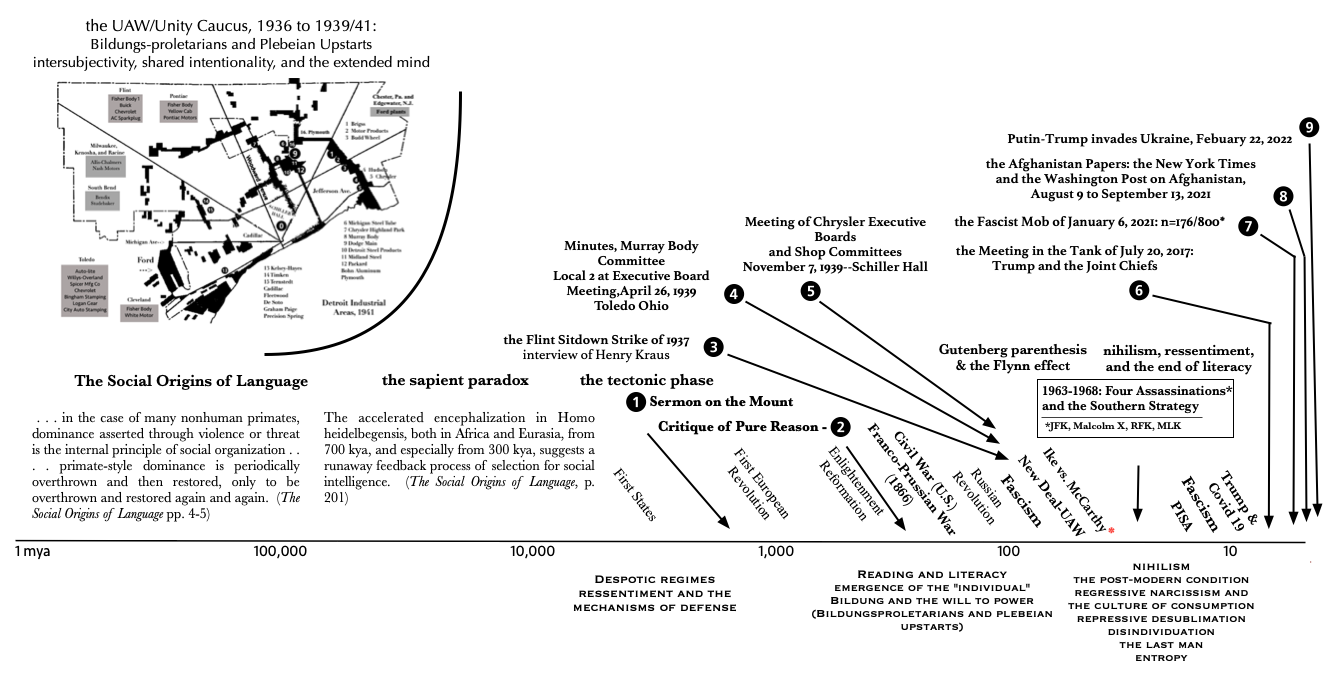
bigger picture. This bigger picture is represented by Figure 0.1.
From the Origins of Language to the End of Print Literacy in the United
States. Figure 0.1 is the irreducible minimum if one is to understand the New
Deal, "Trump," and the historical path connecting them. This is because "Trump" forces us to face the question of our primate heritage and its corrolary,
patrimonialism),
on the one hand, and the fragility of print-based civilization, on
the other.
This page is meant as a quick view of
what this site is getting at.
|
|

Colin Woodard, American Nations: A History of the Eleven Rival Regional Cultures of North America (Penguin, 2012)
|
the fragility of print-based civilization
from the Enlightenment to the New Deal: Lyons on history of reading
from the New Deal to Donald Trump
Donald Trump and the end of print-based civilization
Murray Body discuss problem
Trumps discuss TANK
FDR speech Mad Sq Gard Oct 30, 1036
Kraus on FDR speech in Detroit
Saul Bellow
|
Bildung and Literacy: On Reading as a Transformative Process
|
Martyn Lyons, A History of Reading and Writing In the Western World (PalgraveMacmillan, 2010)
9. The Reading Fever, 1750-1830
("Everyone in Paris is reading . . . People read while riding in
carriages or taking walks . . . Women, children, journeymen
and apprentices read in shops. On Sundays people read while
seated at the front of their houses; lackeys read on their
back seats, coachmen up on their boxes, and soldiers keeping guard."
10. The Age of the Mass Reading Public (“Between the 1830s and the First World War . . . a mass reading public came into existence.”)
11. New Readers and Reading Cultures ("The half century between the 1880s and the 1930s was the golden age of the book in the West.")
|

|
|
the New Deal
|
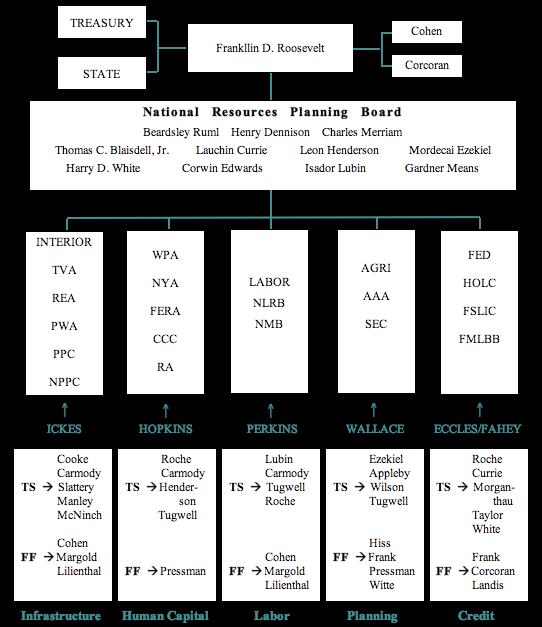
Intersubjectivity, Shared Intentionlity, and the Extended Mind: the Keynesian Elite in the
New Deal State, is an organizational chart of the Roosevelt
administration circa 1936. This particular social formation
(TS+FF) emerged out of the Eastern Rate Case of 1910, played a critical
role in the industrial side of the conduct of the First World War (when
FDR, Frankfurter, and the Taylor society linked up), and became, as
Figure 1a indicates, the socio-technical infrastructure of the New Deal
state. The work that produced this result can be found here:
"The Origins of the "Welfare State": The Keynesian Elite and the Second New Deal, 1910-1936" (manuscript, 1987)
Notice that it is possible to group the administrative
agencies of the New Deal state into five major groups: infrastructure,
human capital, labor, planning, and credit. Each group was
staffed by a set of Taylor Society "technocrats" and a
Frankfurter-linked lawyer. (See The Brandeis/Frankfurter
Connection: The Secret Political Activities of Two Supreme Court
Justices.)
The
Taylor Society emerged
in the course of
the Eastern
Rate Case
(1910), and is the Brandeisian wing of Progressivism: cosmopolitan,
enlightened,
and above all, committed to science.
Much attention has been paid to the middle class,
professional
character of this wing of progressivism (Otis Grahan Jr. Old
Progressives and New Deal); almost none to the vast array
of
modern firms that constituted the business milieu of Progressivism (Gal is the exception).
Study of these phenomena reveals the advanced capitalist nature
of what is almost
universally misconceived as some kind of coalition of middle class
reformers, workers, and farmers that was anti-business. In fact, a close study of the
Keynesian Elite in the New Deal state shows that not only was the
leading institutional formation of reform not anti-business (they
represented important parts of modern capitalism); and not merely
middle
class reformers (they were part of the emergence of the higher-order
functions of advanced capitalism that transcended the merely localized
praxis of the firm); they were the vanguard of
advanced capitalism. In fact, Morris L. Cooke refered to the Taylor Society as the spearpoint of
modern business (the less clumsy term vanguard was already taken in another context).
This site is a critique of marxism from within. Thus, marxists
don't seem to be interested in actually existing
configurations of capital, nor are marxists open to the reality of
elite competition in an electoral environment, and the way in which
that can produce outcomes not reducible to "class interests". No
one seems to have any idea of where the New Deal came from, what it
was, and what happened to it. Relatedly, no one seems to have a
clue that "Trump", in terms of American politics, and geneologically
speaking, is a moment in the unfolding of Thermidor.
*Simon Clarke, Social Theory, Psychoanalysis and Racism (Palgrave Macmillan; 2003)
|
s
|
Intersubjectivity, Shared Intentionality, and the Extended Mind:
the Keynesian Elite in the New Deal State
Source: "Membership List, May 1927" in the Morris L. Cooke Papers, box 66, FDR Library,
and The United States Government Manual 1937. Also: the Papers of John M. Carmody
The Keynesian Elite in the New Deal State: Career Matrix
Nobuo Noda, How Japan Absorbed American Management Methods (Asian Productivity Organization, 1969)
Ordway Tead, "An Interpretative Forecast of the NRA: Is the Trend Toward Fascist or
Socialized Self-Government?" Bulletin of the Taylor Society, August 1933
For context see Elites: Strategic and Otherwise
FDR vs. the Slave Power: MEMO July 10, 1935
"Liberal Businessmen" Ezekiel
See the evolving KE-NewDeal page here
|
the Networks and Discourses of Power: the Enigma of Hegemony (Frazer, Mayer)
Elites (functional, role)
Political discourse occurs at five levels. First, at the level of
strategic elites--commodities in int'l trade, securities bloc,
Keynesian elite (see Person to Cooke; think tanks). see KE in New
Deal State; FF to FDR
Second, higher order national interest groups (e.g., Titan Tire et.
al.). These might be thought of as implicitly strategic: Titan
Tire is bound to the strategy of national infrastructure development
Third: U.S. Chamber of Commerce: this is truly an interest group: it is
the average mid-sized manufacturer writ large, rather than a synthesis
at a higher level of a strategic perspective (i.e., cotton
industry 1933 (Galambos) (thus, Times article on corp contributer to
tea party regrets
Fourth, at the level of economically defined lower-order (non-elite)
interest groups (local Chambers of Commerce, wealthy taxpayers, union
members). [Mayberry Machiavellis], Miles; Iowa camapain
contributions. NYT Aug 5, 2015 article, The Kansas
Experiment. This is the mileu in which the GOP is rooted at the
local and state level. Racist appeal; Goldwater
Michael Wolff on GOP respectables
Fifth, at the theatrical level of mass politics the theater of
ressentiment AND DESIRE that politics provides, wherein the
manipulation of the inner logic of the paranoid schizoid and depressive
positions governs the rhetorical productions of political actors.
This page and Ressentiment and the Mechanisms of Defense are concerned
only with the theatrical (mass) dimension of political discourse.
ADD: primordial elites
|
|
Fig. 1a.1. U.S. Political Economy by Sector, 1910 to 1948
input-output matrices: sectors of realization and the two-party system

Elites: Strategic and Otherwise
the Big One
|
A rhizome is inherently chaotic. This problem is adressed by imposing a focus from without: a critique of marxism from within.
Marxism is not a thing or an ideology in the context of this site. It
is the name given to to a phenomenological bundle, just as, in the
context of this site, Fascism is the name given to a phenomenological
bundle.
|
|
History without philosophy is only a screen
on which to project the
shibboleths of our time

His
Immanence, Georg
Wilhelm
Friedrich Hegel
The
site as a whole recognizes that the Internet is the
techno-cognitive axis of a praxiological revolution in thought,
where
the extended mind is fused with philosophy
as the critical
accompaniment to empirical
practice
|
organization and geography matter
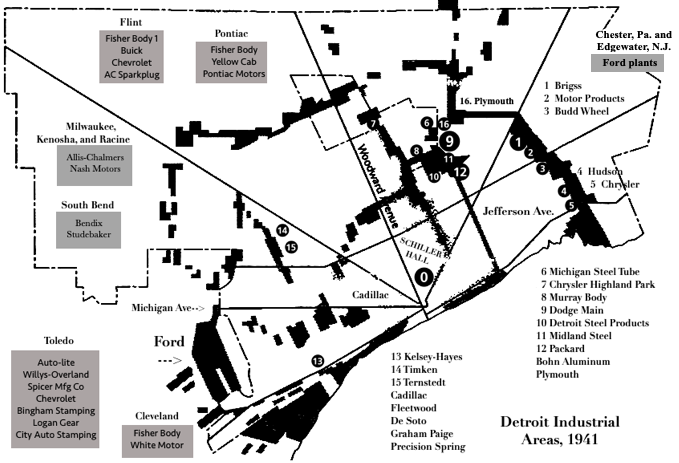
The UAW-Unity Caucus, 1933-1943: Intersubjectivity, Shared
Intentionality, and the Extended Mind (Bildungsproletarians and
Plebeian Upstarts), is a map of sources. While I interviewed
veterans of the organizational struggle from the Conner Avenue area on
the far east side of Detroit (Briggs, Budd Wheel, Hudson, and Chrysler), and workers from Fleetwood, Ternstedt,
and Ford on the west side of the city, the most intensive work was done
with veterans of the organizational struggle on the near east side:
Michigan Steel Tube, Chrysler Highland Park, Murray Body, Dodge Main,
Midland Steel, Detroit Steel Products, Packard, and Plymouth, and with
veterans of the organizational struggle in Flint (Fisher 1, Chevrolet, and Buick) and Pontiac (Pontiac Motors, Yellow Cab).
What
made this whole site
possible is the literary and cognitive capabilities of the
bildungs-proletarians and plebeian upstarts whom I interviewed. These
bildungs-proletarians inhabited the biocultural niche of modernity. They were intensely rather that merely
literate. In
this regard they had more in common with the New Deal vanguard of
Figure 1a than they had with the “masses” of their fellow workers in
the plants. For this reason it was
possible to co-construct a discursive web incorporating all the
interviews that, in another context, could be referred to as the
extended mind of the Unity caucus.
It was these bildungs-proletarians around whom formed the action
networks of plebeian upstarts (the Unity Caucus) who created the modern
UAW in the 1930s. From the standpoint of praxis both the Unity
Caucus and the Keynesian elite should be conceived of as vanguard
formations within the biocultural field of Progressivism.
All of us historians who interviewed these workers back in the nineteen
seventies and eighties were not only struck by their powers of mind,
but also by what can only be described as their strength of
character. They were the embodiment of civic republicanism.
Mind matters. (Hegel)
|
|
The UAW-Unity Caucus, 1933-1943:
Intersubjectivity, Shared Intentionality, and the Extended Mind
Bildungsproletarians and Plebeian Upstarts
the UAW, 1933-1943: a working notebook
See the evolving UAW-New Deal page here
|
the critique of marxism from wthin continues: the industrial proletariat
the critique of marxism from within continues:
the bildungs-proletarians around whom formed the action
networks
of plebeian upstarts (the Unity Caucus) who created the modern
UAW in the 1930s.
Ranciere & Thompson are about Bildung (Lock, Wellman, Adam: Hegel)
the sense of the adventure of development: Bildung and modernist sensibilities
the BigQuestion: Agency (not an individual affair; Cartesian presuppositions
Murray Spring
Tank
Reading
Dodge Main emergeency meeting
FDR speeches
|
|
Interrogating Dasein: bildungsproletarians and plebeian upstarts
Networks of Power

|
praxiological ratios
a. plebeian upstarts
1. the Joe Adams ratio: 10.6% (Dodge Main) PF
2. the Charlie Yaeger ratio: 7.2% (Buick) Skeels
3. the Bud Simons ratio: 7.5% (Fisher Body 1) Skeels
4. the Cliff Williams ratio: 7.1% (Pontiac Motors) PF
b. bildungsproletarians: about one in thousand
Dodge Main: 2 ratios (21,894 members in Fall 1939)
n=34. (0.16%): Emergency Meeting of Chrysler Executive Boards and Shop Committees, October 8, 1939
n=13 (0.06%): Meeting of the Chrysler Executive Boards and shop committees, November 7, 1939
|
Bildungsproletarians' encounters with the "world"
1. encounters with "the grey masses"
a. patrimonial formations: gangs and grifters
b. Masons and K of C
c. the middle (hometownsmen): Elder, Wainwright
d. Polish women (Herman Burt)
e. workhorse uncle toms
f. Hillbillies
2. encounters with "the middling sort"
a. Ben Wainwright interview
b. the Elder report
3. encounters with the skilled trades
a. Mazey on the skilled trades in Briggs
b. Fagan on the "Americans": AAIA, KKK, Bl. Legion
c. Kluck on skilled trades: Homer Martin
d. Kord on the colonization of the tool room UNITY
4. encounters with plebeian upstarts
a. Bud Simons on Toledo flying squadron
b. Edmund Kord on guys from front welding
c. Edmund Kord on the youth "gangs" in the press
rooms
d. Bill Mazey and Joe Adams on the Italians
e. Frank Fagan on the welders in his department/body-
in-white
5. encounters with management
a. Earl Reynolds
b. Bud Simons and Frank Fagan
c. Murray Body spring committee
6. encounters with fascism
a. Bud Simons experience in Saginaw
b. Victor Reuther experience in Anderson
c. Cliff Williams vs. Bert Harris
d. Packard
e. Maurice Sugar in the elevator
f. Lindahl on 1938 meeting (letter to Lewis)
|

Reformation "Roots"
from Richard White, The Republic for which it Stands: the United States during Reconstruction and the Gilded Age, 1865-1896 (Oxford, 2017), p. 776
Pullman's workers had
not been plucked from the slums; they were unlikely to come from
neighborhoods around Hull House on Halstead Street. His factory
in the 1880s employed about 75 percent skilled workers . . . and most
were northern European immigrants: Swedes, Germans, English and Dutch.
Jóhann Páll Árnsason and Björn Wittrock, eds., Nordic Paths to Modernity (Bergham Books, 2012)
Jennifer A. Herdt, Forming Humanity: Redeeming the German Bildung Tradition (Chicago, 2019).
Esp. re. the role of Pietists in American Civil War (pp. 21,
59-60) England, Netherlands, Germany.
Bruce Laurie, Rebels in Paradise: Sketches of Northampton Abolitionists (U. of Mass. Press, 2015)
Bruce Laurie, Beyond Garrison: Antislavery and Social Reform (Cambridge, 2005)
John Donoghue, Fire Under the Ashes: an Atlantic History of the English Revolution (Chicago, 2013)
Kenyon Gradert, Puritan Spirits in the Abolitionist Imagination (Chicago, 2020)
John L. Brooke, "There is a North": Fugitive Slaves, Political Crisis, and Cultural Transformation in the Coming of the Civil War (University of Massachusetts Press, 2019)
Zachary A. Fry, A Republic in the Ranks: Loyalty and Dissent in the Army of the Republic (U. of N. Carolina Press, 2020)
James Brewer Stewart, Holy Warriors: The Abolitionists and American Slavery (Hill and Wang, 1997)
|
|
|
|

U.S.
National Recovery Administration, "Preliminary Report on Study of
Regularization of Employment and Improvement of Labor Conditions in the
Automobile Industry," Washington, 1935
|
|
Job Description for Wage Studies. Metal working industries
US Dept Labor, BLS. Nov., 1945.
| Production
|
Production
|
non-Production
|
Assembler (Class A, B, C)
Machine operator classifications
Automatic Lathe Operator (Class A, B, C)
Drill-Press Operator, Radial (Class A, B, C)
Drill-Press Operator, Single- or Multiple-Spindle (Class A, B, C)
Engine-Lathe Operator (Class A, B, C)
Grinding Machine Operator (Class A, B, C)
Machine-Tool operator, misc. machines
Milling-Machine Operator (Class A, B, C)
Power-Shear Operator (Class A, B, C)
Punch-Press Operator (Class A, B)
Screw-Machine Operator, Automatic (Class A, B, C)
Turret-Lathe Operator, Hand (Class A, B, C)
Swager
|
Forging Press Operator, Hydraulic (Vertical)
Other metal-working occupations
Welder, Hand (Class A, B) (Bill Mazey, Frank Fagan interviews); Almdale and Newby on welding
Welder, Machine (Class A, B)
Polisher and Buffer, Metal (metal finishing)
Riveter, Hydraulic
Riveter, Pneumatic
Solderer (Edmund Kord)
Non-metalworking occupations in the Auto industry
Trim (Joe Adams and Art Grudzen on trim)
paint (Paul Silver on paint testing)
|
Maintenance, Tool and Die, Shipping and Receiving
Carpenter, Maintenance
Crane Operator, Electric Bridge
Die Setter
Die Sinker
Tool and Die Maker
Trucker, Hand
Trucker, Power
Electrician, Maintenance
Electrician, Production
Millwright
Set-Up Man, Machine Tools
Loader and Unloader
Stock Clerk
Inspector (Class A, B, C)
Tester (Class A, B, C)
|
|
|
|
Anonymous. Monthly Labor Review (pre-1986); Washington Vol. 56, Iss. 000001, (Jan 1943): 109
|
|
Bildung: The Republican Dasein and Modernist Sensibilities:
Schiller Hall in Detroit in the 1930s should be viewed as a radical salon,
a
node in the discursive field/biocultural niche of modernity
1. from S.A. Smith, Revolution and the People in Russia and China: A Comparative History (Cambridge University Press, 2008)
We
have seen that for 'conscous' workers in Russia and, to a lesser
extent, in China, reading was an activity that was central to
self-fashioning, constitutive of what it meant to be a cultured and
autonomous individual.
2. Schiller Hall in Detroit should be viewed as a radical salon, a
node in the discursive field of modernity, a meeting place of the
bildungsproletarians. Below (4), Ed Lock (proud grandson of a Civil War veteran) provides an
account
of
the intellectual life of the bildungs-proletarians who gathered in
Schiller
Hall. Saul Wellman (6) (communist, Detroit and Flint), provides an
account of intellectual aspirations of new recruits to the
Party in Flint in the immediate post-war period. Joe Adams (7)
(socialist, Dodge Main) provides an account of such modernist
sensibilities on Detroit's east side, and more generally among the
socialists he knew back in the day. Excerpts from the Wellman and Adams interviews can be found here.
3. comment on Margaret Jacob's The First Knowledge Economy: Human Capital and the European Economy, 1750-1850 (Cambridge, 2014:
Jacob's
emphasis on the socio-cultural networks, circles, meeting houses of
these first "industrialists"; her emphasis on the role of books as
emotionally charged world-opening objects--one sees here both
Vygotsky's notion of zone of proximal development broadened and
historicized, and Alcorn's understanding
of the development of self that can result from an an engagement with a
text. In this way Jacob expands our concept of the Enlightenment.
This requires a reconceptualization of what is called the
Enlightenment--the Enlightenment as a cultural-historical developmental
leap--an ontological leap, a cognitive revolution, a new Symbolic
Order. The superorganisism of the enlightenment . . . from the 18th
century to the New Deal. Scientific reasoning is not merely about
knowledge. It is about functioning on the formal-operational level.
In the adventure of it, the jouissance of developmental transgression
and becoming, lies the secret of the bildungs-proletarians and plebeian
upstarts who gave us so many Nietzschean spectacles . . .
4. from my interview with Ed Lock (CP, UAW Local 600)
I was very active in MESA --- Ford in USSR petered out in March of 1933, and I was laid
off. Several months later I found employment in a job shop as a
milling machine operator. I got signed up in the MESA, that was a
unionized plant. The job didn't last long.
In that period I would hang out at the MESA hall, Schiller Hall* on
Gratiot Ave. . . It was very much a Left hall. I became very
interested in union . . . I was very young, 20 yrs old. My father was
AFL, a ship carpenter, but I didn't assimilate much from him. But I
became very interested in the MESA, and one of the characteristics of
the time was that large
numbers of radicals of all descriptions IWW, Communist, Socialist . . .
would come to this hall, and we would sort of sit around and have big
bull discussions with the old timers from the IWW and the Communists
and whoever was there . . . We would all participate in these
discussions, each of them would bring their literature round . . . I
got involved so to speak, I was unemployed, but I would still go
because I found these meetings fascinating, and I would participate in
the distribution of leaflets.
|
I would go out with some of the leaders, and go with John Anderson or
John Mack, who was a leader at that time. I went to--not so often to
Fords--but I went to the Cadillac plant, Ternstedt, places like this,
and GM, and would distribute organizational . . . I got involved in the
Detroit Stoveworks strike . . . The MESA had undertaken the
organization there and had a bitter strike there. A matter of fact I
had guns put in my ribs in this strike threatening to kill us. But
this was part of my education in the trade union movement.
5.
Karl Emil Franzos, "Schiller in Barnow" (1876), in The German Jewish Dialogue: An Anthology of Literary Texts, 1749-1993, Ritchie Robertson, ed. (Oxford University Press, 1999)
6. on cogntive and cultural "awakening" in Flint immediate post-war years
Saul Wellman Michigan State Chairman of the Communist Party
Wellman: Flint is what I
consider to be the asshole of the world; it's the roughest place to
be. Now we recruited dozens of people to the Party in Flint, and
they came out of indigenous folk. And those are the best
ones. But we couldn't keep them in Flint very long, once they
joined the Party. Because once they came to the Party a whole new
world opened up. New cultural concepts, new people, new
ideas. And they were like a sponge, you know. And Flint
couldn't give it to them. The only thing that Flint could give
you was whorehouses and bowling alleys, you see. So they would
sneak down here to Detroit on weekends--Saturday and Sunday--where they
might see a Russian film or they might . . . hear their first
opera in their lives or a symphony or talk to people that they never
met with in their lives. . . .
On the other hand the
reality of joining a movement of this type is that the guy who is in
the indigenous area looks around and says this is idiocy, I can't
survive here.
7. Modernist Sensibilities on Detroit's East Side, circa 1930s
Joe Adams (Dodge Main Local 3, socialist) interview conducted around 1975-76
My background on
unionism. Mostly it was like on my dad with the newspaper
socialism. He believed in socialism. He used to sit there
and talk. I had seven brothers, and hell, the old man used to sit
down. He was a pretty intelligent guy, like the Reuther boys we
used to listen to the old man.”
Religion was a bunch of
bullshit. As a statesman Reuther got to be where he went to some
church and just went there once in a while just to make it look good,
but shit when he died he [they] let nobody near him—any of
them—godddamn rabbis or preists or ministers, he felt the same way
about all of them there like [Roy] and him, up your bunhole, just burn
it and get the hell over with it. That’s the way I feel about it.
“There are a
nucleus of people in any organization that make all organizations
function. I don’t care what you say. You can have a million
members and there can be fifty of them that makes the UAW function,
which is what happened there for the last thirty five years. The
Reuthers, the Woodcocks, myself. You know when a guy like me
brings in 250,000 members into this goddamn union he has to have a
semblance of some intelligence. he just can’t go out and say ‘I’m
an organizer’. In Patterson NJ there was 32,000 people in Wright
Aeronautical, and I got 23,000 votes out of them people for the UAW.
|
|
mind matters
Taking into account
the major perspectives on the development of
language and cognition, and applying these results and methodologies to
the cognitive-discursive performativities of schooling*, politics, and
the media, we are led to a chilling conclusion: we are now
living through the disintegration of the cognitive-discursive
performativities associated with the biocultural niche of
modernity. What
is happening now is beyond the cognitive scope of current
popular and much scholarly thought, which is economistic in character and Cartesian in its
metaphysical presuppositions.
PISA Math Scores should be placed in the context of Figure 0.
The emergence of the intellectual
cadre essential to our present civilization is neither normative nor
inevitable. Logical-scientific thinking (formal operational
competence)
on a mass scale is very recent (Flynn) and unevenly distributed
(Engeström at the right).
The sharp decline in the scores of Finland and Sweden, and the
significant decline of the scores of the Anglo-Saxon nations, suggests
that the late twentieth and twenty first centuries are where two lines
of
development--sociotechnical advance and cognitive
regression--clash.
Capitalism--at least advanced capitalism--requires advanced minds.
Narcissistic regression--the culture of consumption (see
Hall et. al., Criminal
Identities and Consumer Culture)--undermines the very possibility
of advanced
cognitive development.
*" UC San Diego Sees Students’ Math Skills Plummet" ( Inside Higher Ed, Nov. 12, 2025)
"Why Even Basic A.I. Use Is So Bad For Students," New York Times Oct. 29, 2025
" 350 Teachers on How Screens Take Over Classrooms, as Early as Kindergarten", New York Times, Nov. 12, 2025
" The Screen That Ate Your Child’s Education," New York Times Nov. 16, 2025
|
|
PISA Math
Scores, 2003 - 2015: 25 Nations

Southeast Asian nations
are in light blue; Scandinavian nations + Switzerland in dark blue;
Anglo-Saxon nations in orange; France, Germany, Belgium and Poland in
green; Italy,
Portugal and Spain in red; the United States in yellow.
Asia: C & C-S (Cities and city-
states): Shanghai, Singapore, Hong
Kong, and Tapei. These are the advanced capitalist
nations (some have
been
omitted for the sake visual clarity).
|

|

|
Power matters
|
|
|
|
|
|
|
Configurations of Capital:
Post-modern Capitalism: the Production of Subjectivities and Financialization of everything
Future Forward PAC (2024)
Contributor
|
Occupation
|
Praxis
|
Amount
|
Michael Bloomberg
|
Bloomberg Inc.
|
privately held financial, software, data, and media company
|
$19,000,000
|
Dustin A. Moskovitz
| Asana
| software
company based in San Francisco
| $48,000,000
|
James Simmons
|
Euclidean Capital
|
James Harris Simons (April 25, 1938 – May 10, 2024) was
an American hedge fund manager |
$9,100,000
|
Reid Hoffman
|
Greylock
|
venture capital firm. Early-stage companies in consumer and enterprise software.
|
$9,000,000
|
Christian Larsen
|
Ripple
|
The leading provider of digital asset infrastructure for financial
services.
|
$8,414,950
|
Jay Robert Pritzker
|
Hyatt Corp.
|
a
founder of the Hyatt Corporation
|
$5,000,000 |
Marc Stad
|
The Dragoneer Investment Group
|
Marc
Stad tech investor has backed companies like
Airbnb, DoorDash and Uber.
|
$5,000,000
|
Rory John Gates
|
|
|
$3,000,000
|
Sixteen Thirty FundDM
|
dark money
|
Soros et. al.
|
$3,000,000
|
Martha Karsh
|
Oaktree Capital
|
the largest distressed-debt
investor in the world. . . . Oaktree's clientele includes 65 of
the 100 largest U.S. pension plans, 40 state retirement plans in the
United States, over 500 corporations and/or their pension funds, over
275 university, charitable and other endowments and foundations, and 16
sovereign wealth funds.
|
$3,000,000 |
Fred Eychaner
|
News Web Corp.
|
Newsweb
Corporation is a printer of ethnic and alternative newspapers in the
United States.
|
$7,000,000
|
Kenneth Duda
|
Arista Networks Inc.
|
Computer networking company. designs and sells multilayer
network switches to deliver software-defined networking for large
datacenter, cloud computing, high-performance computing, and
high-frequency trading environments.
|
$2,000,000
|
Eric Schmidt
|
Alphabet Inc.
|
Alphabet
Inc. (Google)
|
$1,600,000
|
Reed Hastings
|
Netflix
|
American subscription video on-demand over-the-top streaming
service.
|
$1,000,000
|
Jeffrey Lawson
|
Twilio
|
Twilio
Inc. is an American cloud communications company.
|
$1,000,000
|
Erica Lawson
|
U. of Cal. SF
|
|
$1,000,000
|
Future Forward USA PAC Donors (2024) (Compare this with Priorities USA (2022); also Priorities USA (2016)
|
|
Bildung and Literacy: On Reading as a Transformative Process
|
Martyn Lyons, A History of Reading and Writing In the Western World (PalgraveMacmillan, 2010)
9. The Reading Fever, 1750-1830
("Everyone in Paris is reading . . . People read while riding in
carriages or taking walks . . . Women, children, journeymen
and apprentices read in shops. On Sundays people read while
seated at the front of their houses; lackeys read on their
back seats, coachmen up on their boxes, and soldiers keeping guard."
10. The Age of the Mass Reading Public (“Between the 1830s and the First World War . . . a mass reading public came into existence.”)
11. New Readers and Reading Cultures ("The half century between the 1880s and the 1930s was the golden age of the book in the West.")
|
|
|
evolving
herds (they know nothing)
interest groups (they know their place)
|
|
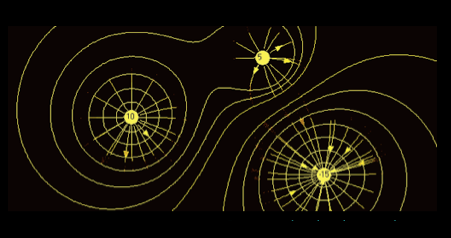
The Two-Party System (Semiotic Regimes): Elites and their Masses
MSNBC/CNN/
New York
Times/Washington Post
NIHILISM (Liberalism)
BILDUNG (Progressivism)
Commercial republicanism Civic republicanism
concrete-operational
and
formal-operational and
pre-operational
concrete operational
Fox News
RESSENTIMENT
Fascism
pre-operational and gestural
rentier sectors; provincial capitals; patrimonial
and predatory businesses and racist political ecologies
|
|
The Two-Party System (Semiotic Regimes ):
Cognitive Performativities and Emotional Configurations

|
LEFT*
|
RIGHT
|
Topology
|
depressive
|
paranoid-schizoid
|
Political style
|
progressive
|
proto-Dorian
|
Cognitive mode
|
concrete & pre-op
|
pre-op and gestural
|
Regime type
|
rational-bureaucratic
|
patrimonial
|
|
|
11 Nations
|